A hailstorm can leave a vehicle covered in dents in a matter of minutes. Instead of one ding to fix, there may be dozens spread across the hood, roof, and trunk lid. Paintless dent repair (PDR) is one of the main ways technicians approach that kind of damage.
Here's a plain-English look at how hail repair works, why PDR often fits, and where it has limits.
Why Hail Damage Is Different
Hail dents tend to be small, rounded, and shallow, and they often show up in large numbers on the panels that face upward. Because the dents are usually not creased or sharp, the paint often stays intact, which is exactly the condition PDR needs.
The challenge is not usually any single dent. It's the volume. A hail repair is a lot of careful, repeated work, and consistency from the first dent to the last matters.
How a Technician Approaches Hail Repair
- Inspect the whole vehicle. The technician looks over each panel under good lighting to see how many dents there are and how they're spread out.
- Check the paint. Cracked or chipped paint usually means a panel needs a different kind of repair.
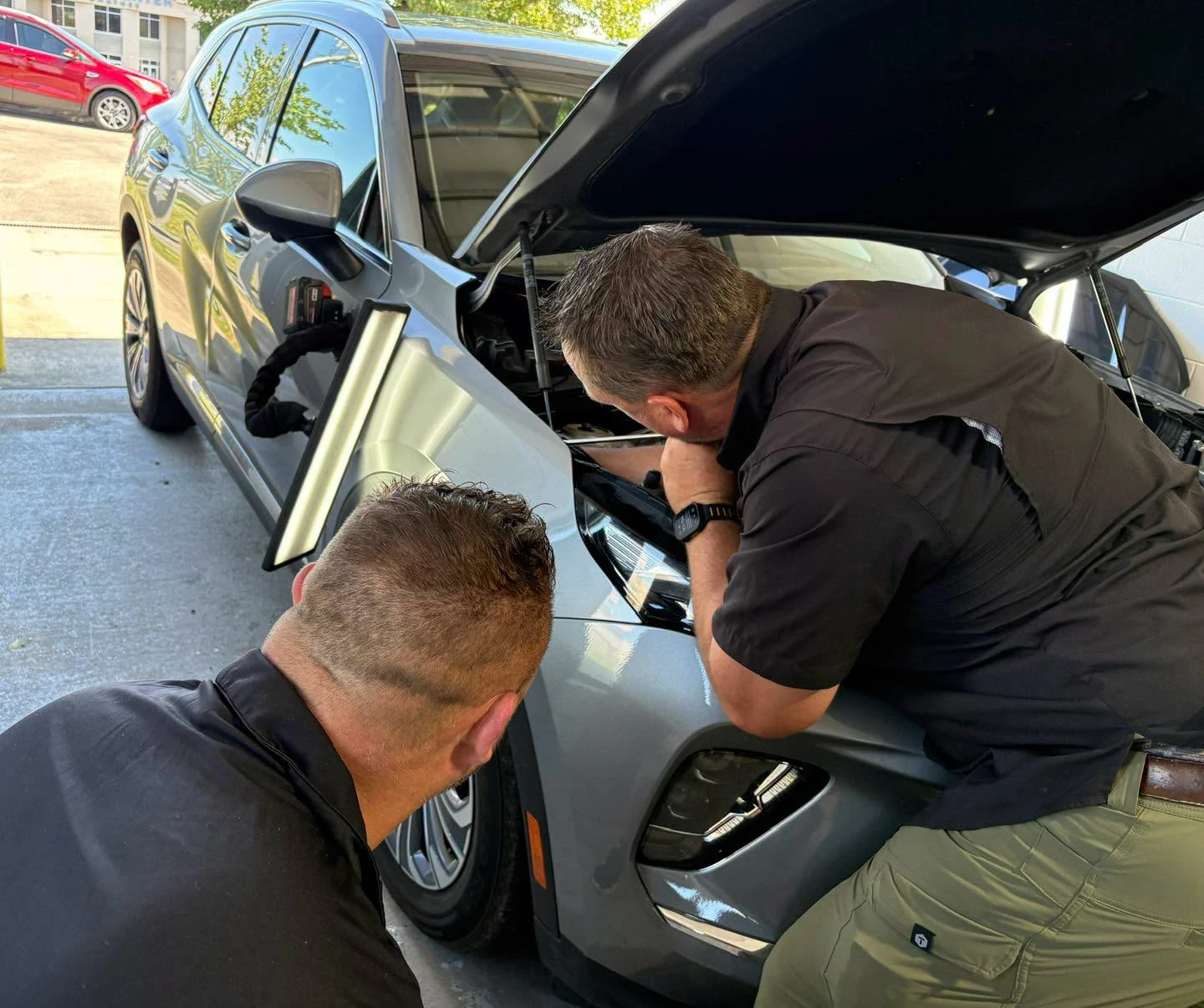
- Plan access. Some panels can be reached from behind, while others have bracing or double layers that limit access.
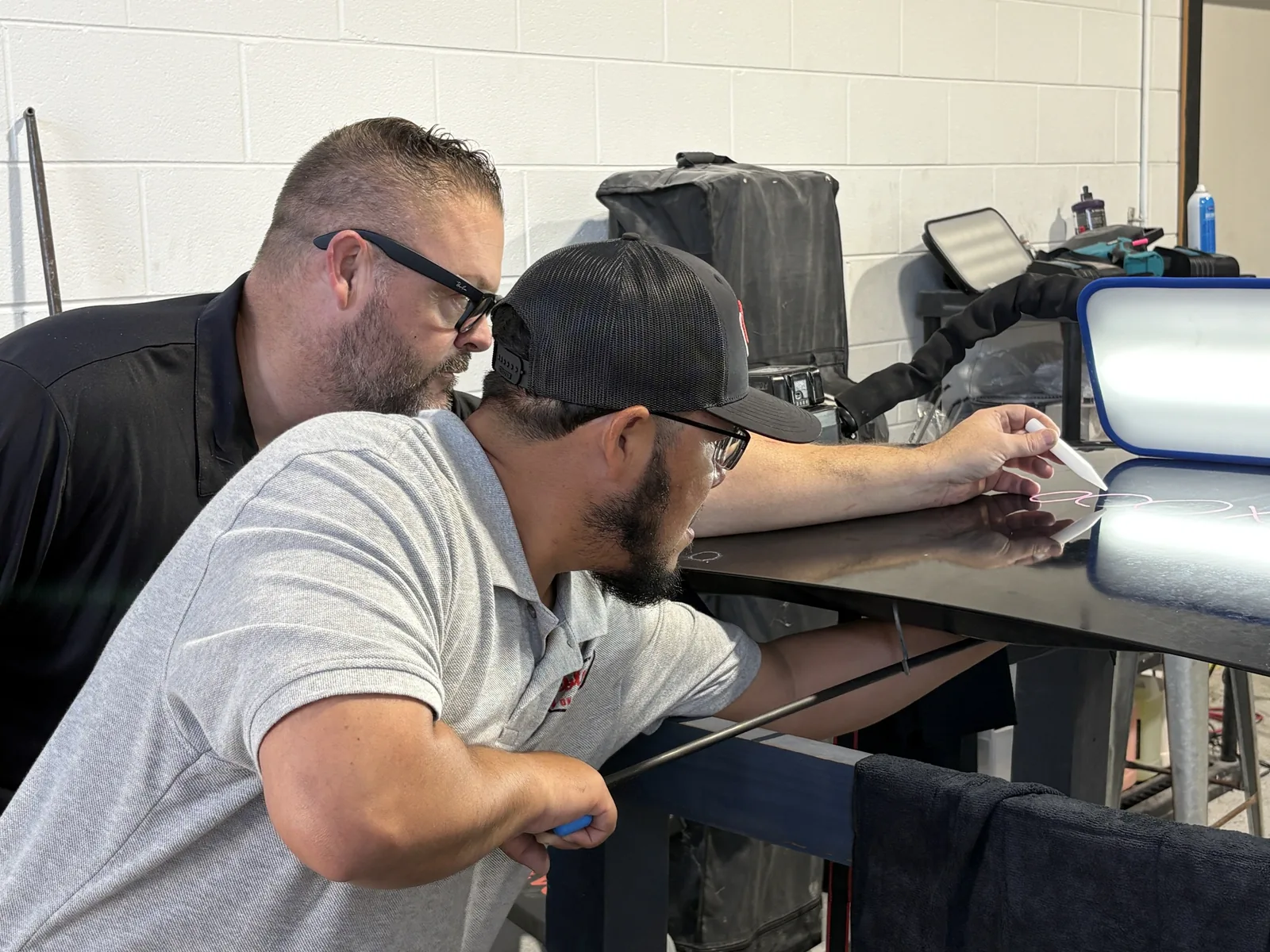
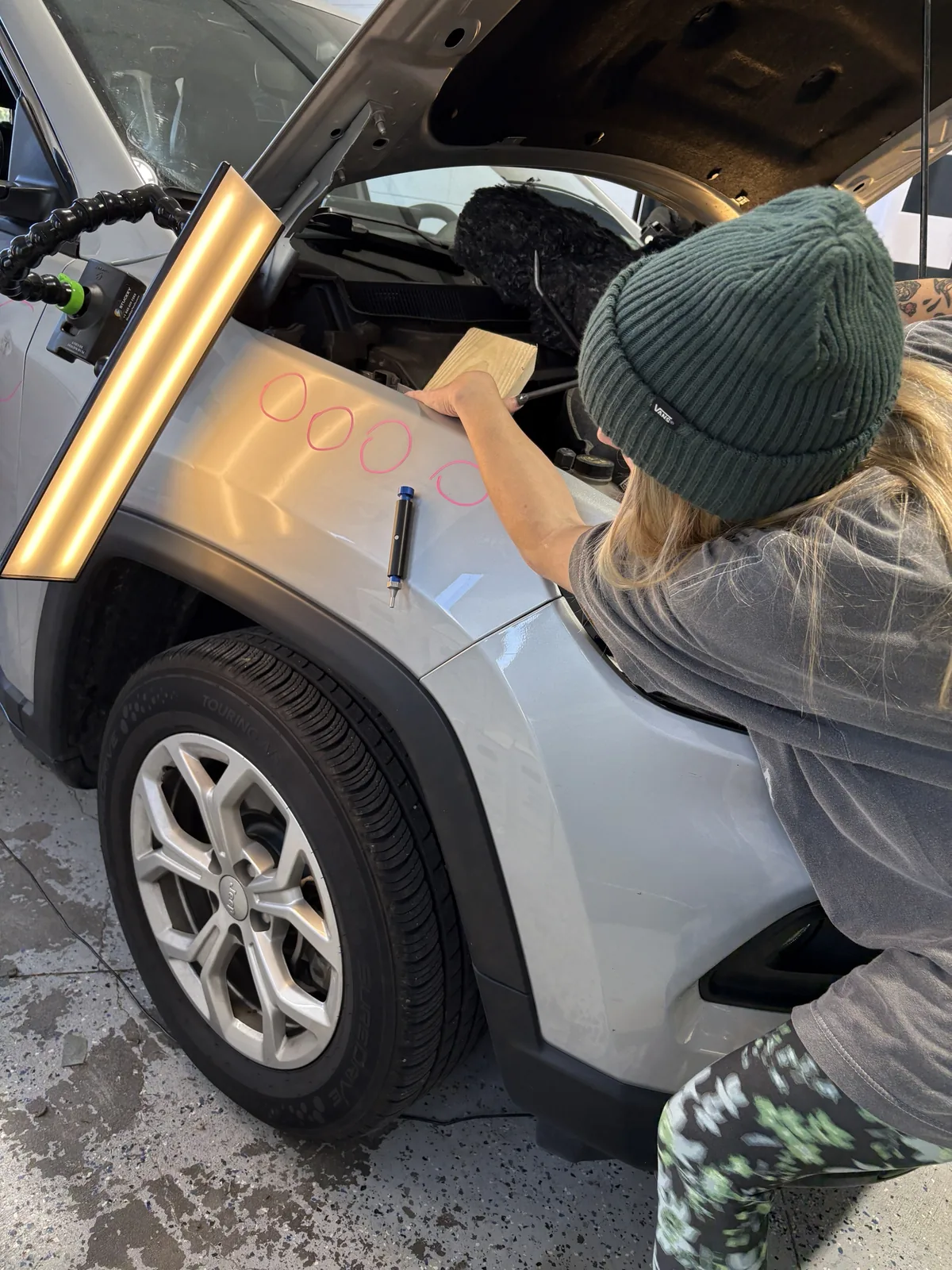
- Work the dents one at a time. Using rods or glue pulling, the technician gradually brings the metal back toward its original shape while reading the reflections from a PDR light.
- Recheck the panel. Dents are checked again as the repair goes, so the surface ends up even across the panel.
Why Reading Reflections Matters
On a hood covered in small dents, the reflection is everything. A PDR light shows how the surface is bending, so the technician can see where the low spots are and when the panel has come back to level. Without that feedback, it's easy to leave a high spot behind while chasing a low one.
Where PDR Has Limits on Hail Damage
PDR is not the answer for every hail-damaged panel. Some situations may call for traditional body work instead:
- Cracked, chipped, or flaking paint on the panel.
- Dents that are very deep or sharply creased.
- Dents close to a panel edge or body line, where the metal is stiffer.
- Areas where there is no workable access to the dent.
A good technician is honest about which panels are PDR candidates and which are not, rather than forcing a repair that won't hold up.
For more on how that call gets made, read what dents paintless dent repair can fix.
What This Means If You Want to Learn PDR
Hail work rewards patience, steady hands, and the ability to stay consistent across many dents in a row. Those are skills built through repetition on real panels, with someone who can look at your work and tell you what to adjust.
If you're comparing PDR with other ways to fix dents, see PDR vs. traditional body work.
Learn PDR at Dent College
Dent College teaches Paintless Dent Repair in person in Knoxville, Tennessee, with a maximum of four students per class. In our 10-day program, you work on real panels and vehicles with an instructor beside you, and you take home a professional PDR tool set, a durable case, and an LED light. Students arrange their own travel and lodging.
Income varies by individual, market, and business. Dent College does not guarantee employment or any specific earnings.