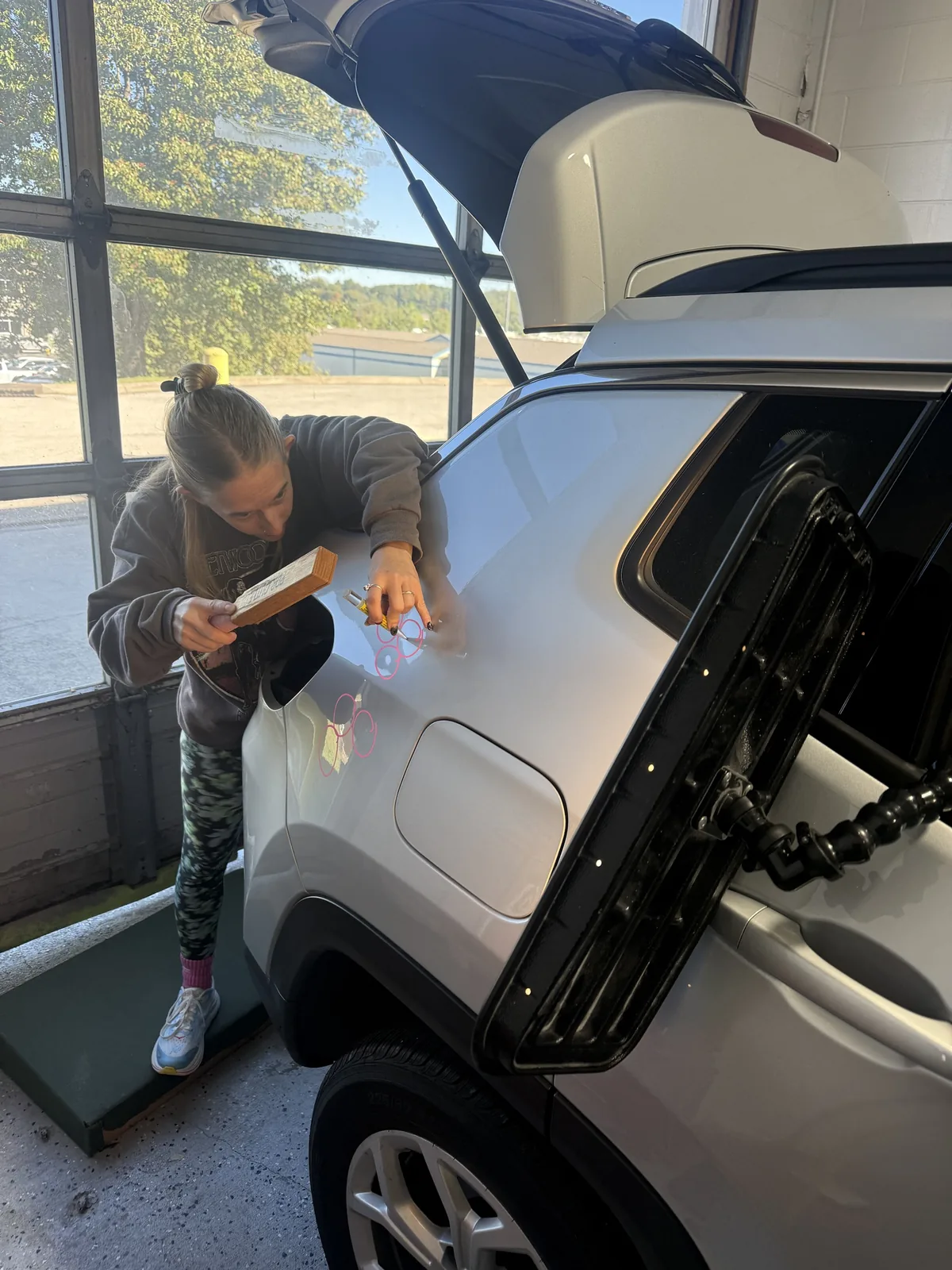
Paintless dent repair is a skill that takes real practice, but it is very learnable with structured, hands-on training. You do not need previous auto body experience to begin at Dent College. You do need patience and a willingness to slow down, ask questions, and repeat the basics instead of chasing speed.
The idea sounds straightforward: use controlled tool movements to bring dented metal back toward its original shape without repainting the panel. Doing that carefully involves several skills at once. You are watching a reflection, locating a tool tip you cannot see directly, and judging how much pressure to use. Learning those pieces separately makes the whole process less overwhelming.
Why PDR Feels Difficult at First
Beginners often expect the challenge to be strength or owning the right rod. The harder part is connecting what your eyes see with what your hands are doing. A small movement behind the panel can change the reflection on its surface. Until you can connect those two things, even a simple practice dent can feel confusing.
That confusion is not a reason to rush or push harder. It is a reason to pause and identify the part of the process you do not understand. Can you find your tool tip? Is the light showing the low area clearly? Is your body position making control difficult? Those are more useful questions than asking why the dent is not already gone.
Reading Reflections Before Moving Metal
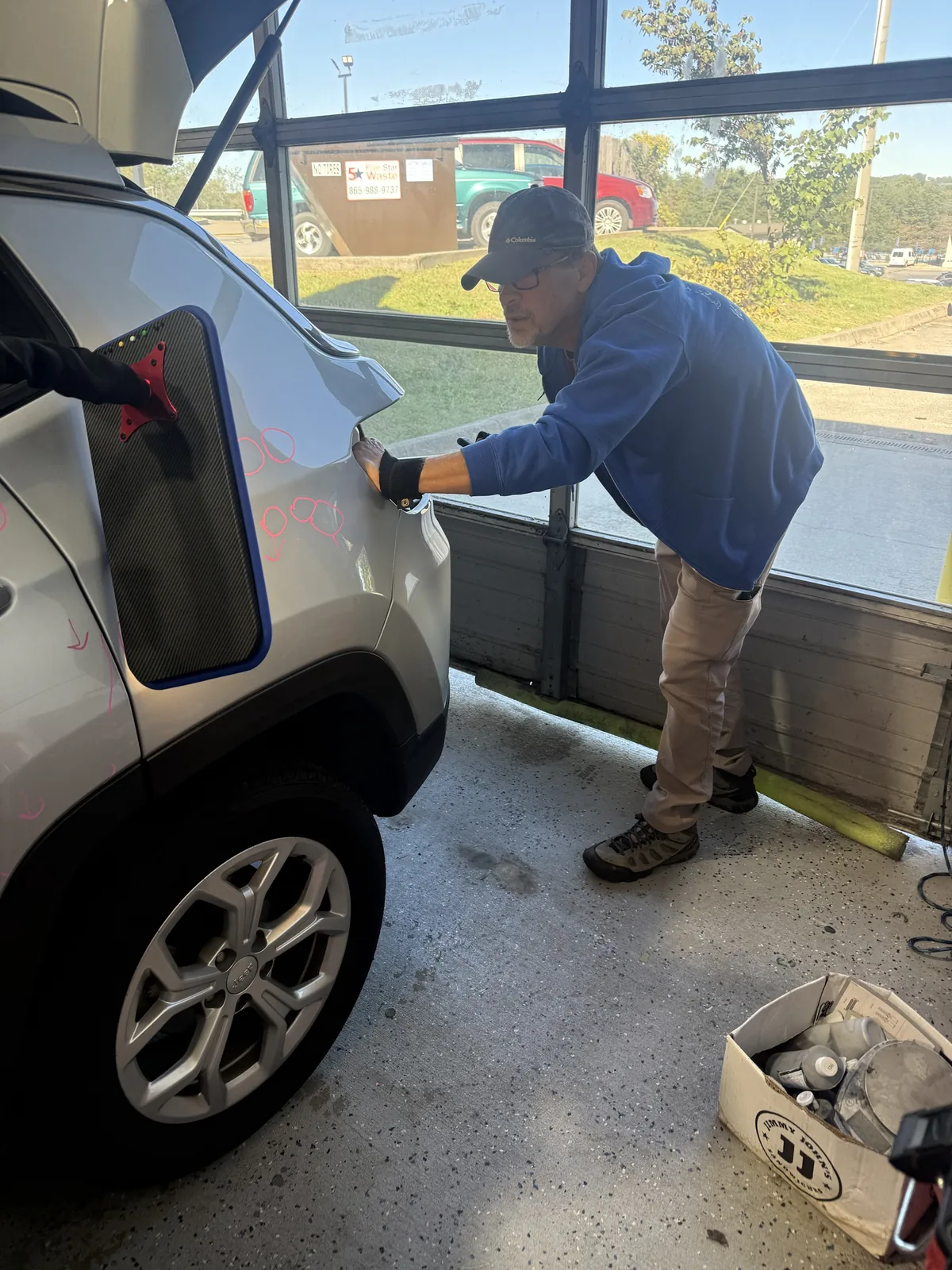
A PDR light or reflector board helps you read the shape of the panel. The reflection shows the difference between the surrounding surface and the area that has moved. Learning to interpret those lines is part of learning the repair, not an optional step before the real work begins.
Look Before You Push
Start by studying the dent without moving the tool. Identify the low area and look at the surrounding metal. Then consider what you want your next small movement to change. If you cannot explain what you are seeing, ask an instructor to read the reflection with you before adding pressure.
Recheck Your View as You Work
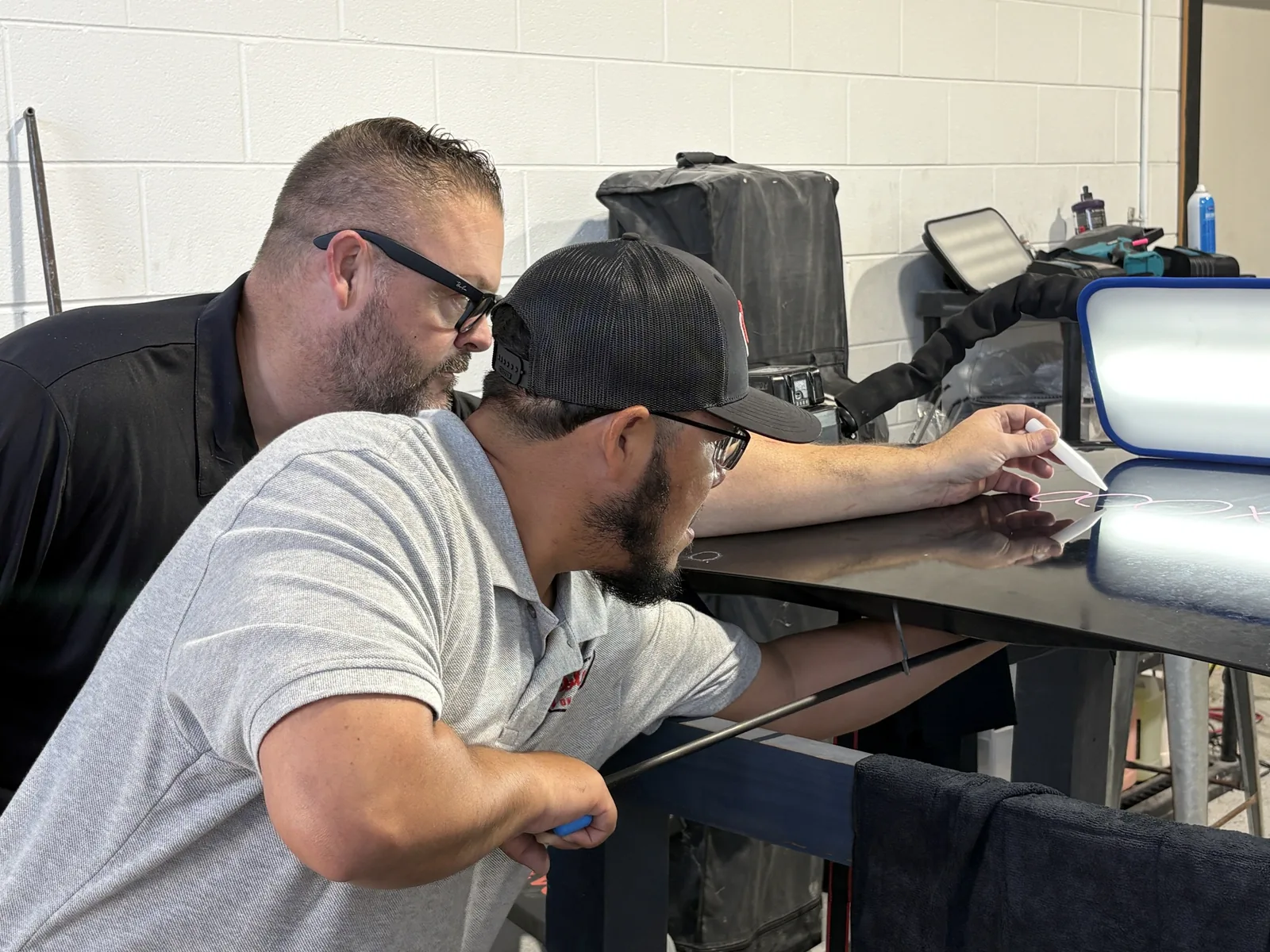
The panel changes as you work, so the original view is not the whole story. Stop and look again rather than repeating the same push automatically. The goal is to connect a deliberate movement with a visible change. In class, an instructor can stand beside you and help explain that connection on the panel you are actually working on.
Understanding Metal Movement
A dent is not simply a hole that needs to be pushed upward. The surrounding metal matters too. Learning to read that relationship helps you avoid treating every dent as the same shape or assuming the middle always needs the most force.
Dent College's program includes dent control, consistent push patterns, refinement, and repair sequencing. These are related skills. You learn to think about where to work, how to approach the panel, and when to stop and reassess. A repair plan gives each movement a purpose instead of turning practice into random pushing.
Pressure Control: Small Movements, Clear Feedback
Pressure is one of the parts of PDR that watching alone cannot teach your hands. Too much force can create a high spot. Too little may not change the area you intended to move. The useful lesson is not a universal amount of pressure. It is learning to notice the response and adjust your next movement.
A controlled practice routine is simple: locate the tip, make a small movement, release the pressure, and inspect the reflection. Repeat with attention rather than speed. If the tool is not where you think it is, stop. More force does not solve a location problem.
Body Position and Leverage Matter
A tool that feels awkward can make gentle control harder. Dent College's curriculum includes hand tools, leverage control, body position, and tight access. Those topics belong together because the way you reach a dent affects how you move the tool. Ask for feedback on your setup, not just the finished surface.
The Learning Curve: Fundamentals Before Speed
Our Knoxville program provides 10 days of hands-on instruction. That is time devoted to foundations, repair consistency, refinement, and working on real panels and vehicles. It is not a promise that every kind of dent becomes easy in 10 days or that practice ends when class does.
Early practice should focus on understanding the reflection and controlling the tip. More involved work adds access problems, different panel positions, and repair sequencing. Creases and body lines should not become your personal test of whether you can learn the basics. Start with the task your instructor gives you and build from there.
A useful practice question is, "Can I explain what I changed and why?" That keeps attention on the process. Speed is part of the published curriculum, but moving quickly without knowing what the tool is doing is not the same as working efficiently.
Common Beginner Mistakes to Watch For
- Pushing before reading the reflection. Pause to identify the low area and what you want to change.
- Losing the tool tip and adding force anyway. Re-establish its location before continuing.
- Trying to fix everything with one large push. Work in small, deliberate movements and reassess.
- Ignoring a high spot while continuing to push. Ask how to balance pushing and tap-down work.
- Changing tools constantly without understanding the problem. Check your light, access, and position first.
- Treating a difficult repair as a test of talent. Work on the fundamentals instead of rushing into complexity.
These are practice habits to discuss with an instructor, not a checklist that makes every repair appropriate for PDR. Knowing when to ask for help is part of learning. If you are unsure what the reflection means, explain what you think you see and let the instructor help you test that understanding.
What a Knoxville Class Adds to Self-Teaching
Self-study can introduce vocabulary and show you a repair sequence. It cannot watch your hands on your own panel or correct the amount of pressure you are applying. That is the practical difference between seeing a demonstration and having someone coach your actual movement.
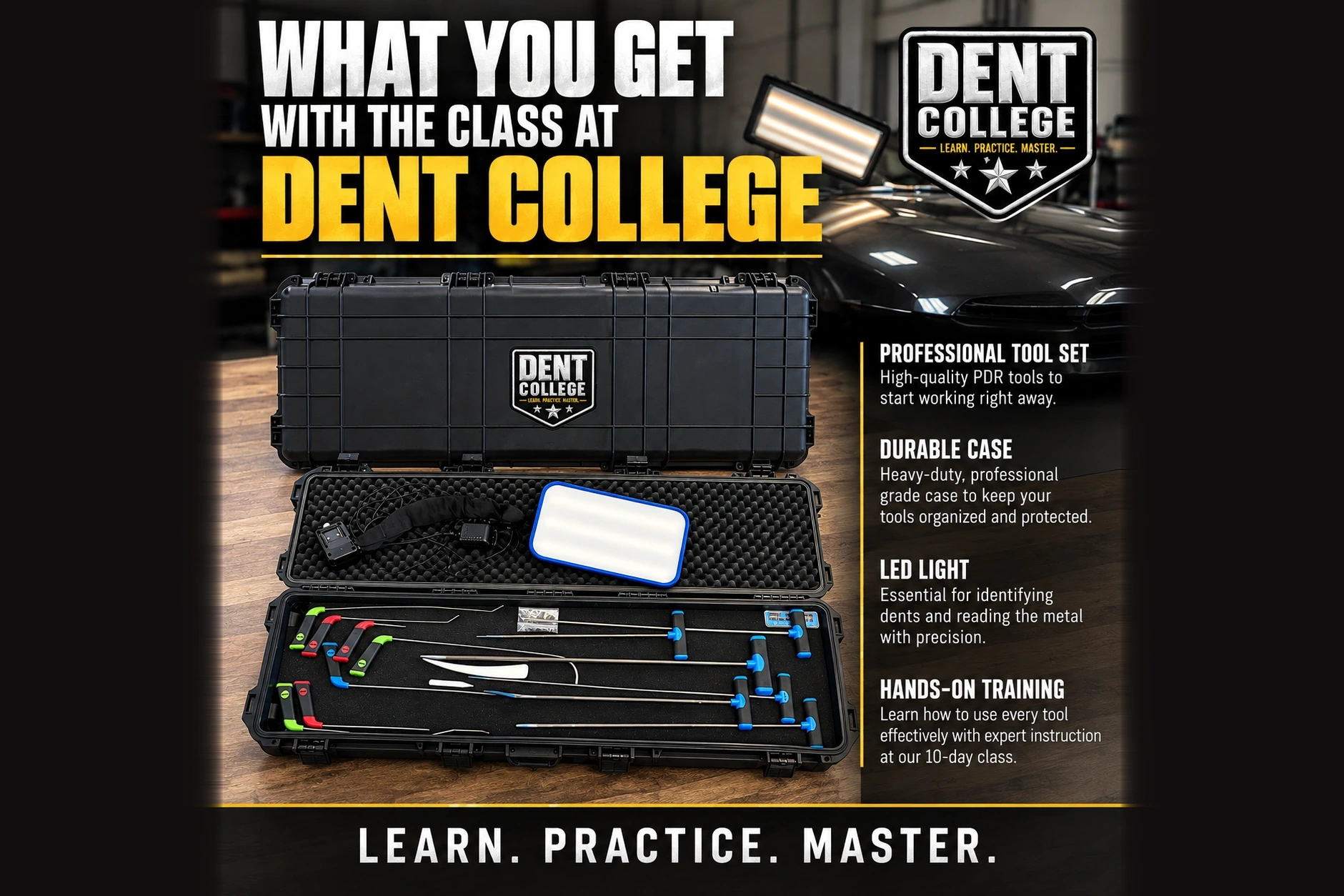
Dent College teaches individual students in person in Knoxville, Tennessee, with a maximum of four students per class. The program includes real vehicle repair experience and a professional tool kit and LED lighting board. Small-class, panel-side instruction lets you ask about the specific dent in front of you rather than trying to match it to a video.
The published curriculum progresses from foundations through repair consistency and refinement to access, leverage, real vehicle workflow, and a final evaluation. It also includes a growth plan. That structure gives practice a direction. Students arrange their own travel and lodging for the Knoxville class, so include those plans when choosing a date.
Tools Support the Learning, Not the Other Way Around
Buying more equipment does not remove the need to learn reflections and pressure control. It is easier to understand why a tool is useful when you have tried it under instruction and can connect its shape to a particular access problem.
For a practical equipment overview, read what tools you need to start paintless dent repair. It explains the core tools and how to think about buying first versus adding equipment later.
Frequently Asked Questions
Do I Need Mechanical Experience to Learn PDR?
No previous experience is required for Dent College's program. Bring a willingness to practice and ask questions. The course starts with foundations such as reading reflections, handling core tools, and making controlled pushes rather than assuming you already know auto body repair.
Can I Learn Everything in 10 Days?
Ten days provides structured time to work on the fundamentals and the published curriculum. It does not replace continued practice or make every difficult repair routine. Treat the class as a foundation and use what you learn to guide your practice afterward.
Why Is Finding the Tool Tip So Important?
You need to know where the pressure is being applied before judging whether to add more. If the tip is not where you intended, a stronger push can move the wrong area. Locating it and checking the reflection are basic control habits.
Is Dent College Training Online?
No. Individual training is hands-on and in person in Knoxville, Tennessee. The class includes panel-side instruction and real vehicle repair experience. Students are responsible for arranging their own travel and lodging.